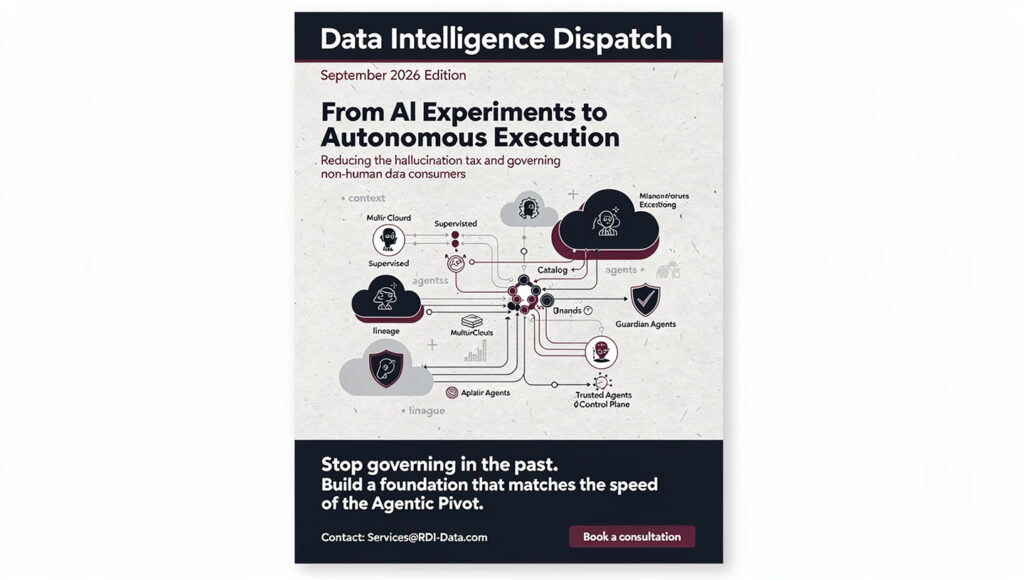
Welcome to the September 2026 edition of the Data Intelligence Dispatch. This past month marked a major turning point in enterprise data architecture as AI transitioned from pilot-phase experimentation into full-scale, autonomous agent execution. The overarching theme of September 2026 is reducing the "hallucination tax" and governing non-human data consumers. As organizations deploy autonomous coding and operational agents across multi-cloud environments, the risk of agents reaching unverified, stale, or sensitive data has become the primary bottleneck to ROI. The top developments this month highlight how active context management, runtime supervision (Guardian Agents), agentless unstructured file discovery, and catalog-layer lineage are creating the trusted control plane needed for safe, high-velocity AI transformation. The September 2026 Data Intelligence Dispatch outlines a decisive shift from passive metadata storage to active context management and runtime agent supervision. The common thread across this month's major announcements—from Collibra’s Guardian Agents to Ohalo’s Data X-Ray for unstructured RAG context and Alation’s AIOS expansion—is that enterprise AI failure is rarely an algorithmic problem; it is a context problem. Organizations are responding by placing catalog-layer lineage and automated CI/CD review gates around non-human data consumers, ensuring that as autonomous agents generate code and execute business choices, they remain grounded in certified, auditable enterprise metadata.
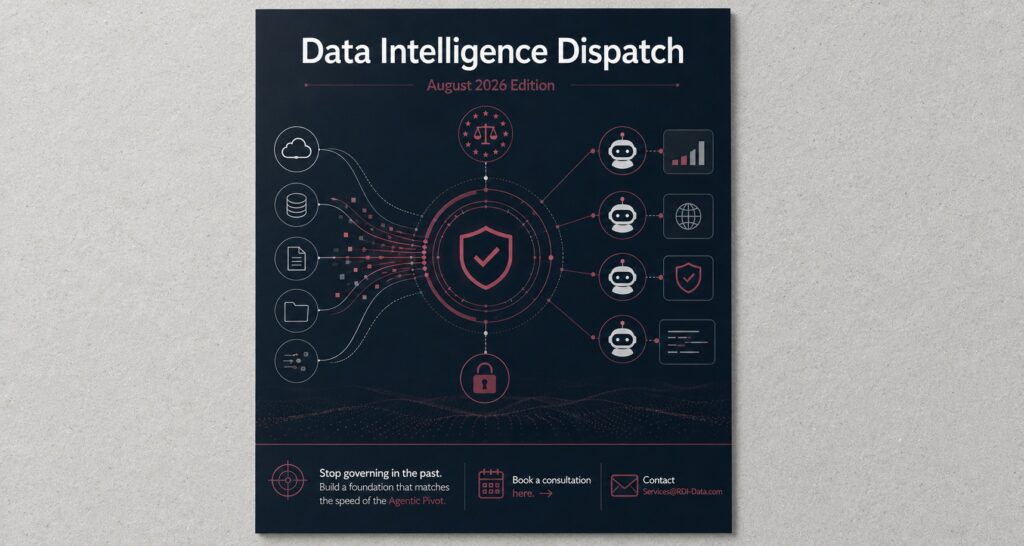
Welcome to the August 2026 edition of the Data Intelligence Dispatch. This past month has marked a historic turning point in enterprise data architecture: on August 2, 2026, the high-risk provisions of the EU AI Act officially entered full legal enforcement, shifting data governance overnight from an abstract compliance exercise to a non-negotiable operational boundary. As organizations scramble to audit their AI pipelines, the defining technical trend of August 2026 is the rapid adoption of the Model Context Protocol (MCP) and Active Context Platforms. Leaders are realizing that static data catalogs and manual stewardship approvals are fundamentally incapable of moving at "machine speed." To prevent autonomous AI agents from acting on flawed metrics or violating data sovereignty laws, enterprises are embedding live, code-driven metadata, column-level lineage, and automated object-level encryption directly into runtime environments.
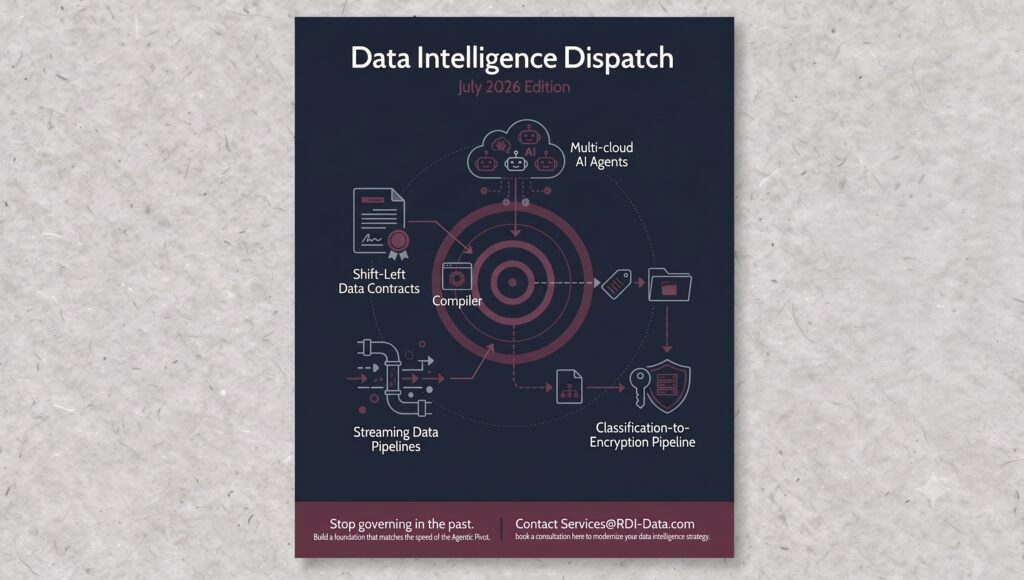
Welcome to the July 2026 edition of the Data Intelligence Dispatch. This past month marked a major inflection point in enterprise data strategy: organizations are moving beyond basic model experimentation and confronting the operational reality of managing autonomous AI agents at scale. The defining theme of July 2026 is contextual enforcement and data-centric protection. Modern enterprises are realizing that traditional perimeter-based governance and static metadata catalogs cannot keep up with multi-cloud AI agents, streaming pipelines, and unmapped unstructured files. By embedding governed context compilers, automated file classification-to-encryption pipelines, and shift-left data contracts directly into execution engines, leaders are turning data lineage and catalogs into live operational control planes.
Welcome to the June 2026 edition of the Data Intelligence Dispatch. This month has solidified a dramatic baseline shift in enterprise data strategy: the era of passive "check-the-box" data logging is over. As organization-wide pressure to deploy Agentic AI, conversational analytics, and retrieval-augmented generation (RAG) reaches a fever pitch, data leaders are encountering a hard reality. The defining theme of June 2026 is the rapid transition toward unified, multi-platform control planes. Frontrunner organizations are recognizing that manual documentation cannot scale alongside automated code generation and autonomous agents. By natively weaving bi-directional metadata synchronization, active data catalogs, and deep file-level discovery directly into core cloud data clouds, companies are turning data intelligence into an active, automated defense against algorithmic failure and regulatory liabilities.
Welcome to the May 2026 edition of the Data Intelligence Dispatch. This past month has marked a definitive transition in corporate data strategy: the industry has moved sharply past the romanticism of "model quality" and landed squarely on the practical mechanics of governing the corporate corpus. As organizations deploy autonomous AI agents at an exponential rate, the traditional boundaries of data management have broken down. The defining trend of May 2026 is the rise of automated, active data control planes—systems that embed data lineage, semantic catalogs, and file-level classification directly into real-time workflows. Leaders are realizing that to survive regulatory enforcement and eliminate the "hallucination tax," data must be machine-readable, human-verifiable, and fully auditable at the moment of execution.
Welcome to the April 2026 edition of the Data Intelligence Dispatch. This past month has marked a definitive shift in the enterprise tech landscape: organizations are waking up to the reality that throwing money at advanced AI models yields empty returns without an equally advanced data foundation. April’s breakthrough developments demonstrate how industry leaders are moving away from passive, "check-the-box" documentation and transitioning toward active metadata management. By weaving automated data lineage, semantic data catalogs, and code-driven data contracts directly into the modern operational stack, organizations are turning data governance from an abstract compliance mandate into a core catalyst for scalable, high-fidelity AI.
Welcome to the March 2026 edition of the Data Intelligence Dispatch. If February was about the hype of "agentic AI," March has been about the sobering reality of how we actually govern it. We’ve seen a massive shift this month: organizations are moving away from manual, "check-the-box" stewardship toward autonomous, outcome-based systems. From the White House releasing a national framework to major industry players like Collibra and Alation automating the very fabric of metadata, the message is clear: if your data isn't agent-ready, your business isn't AI-ready.
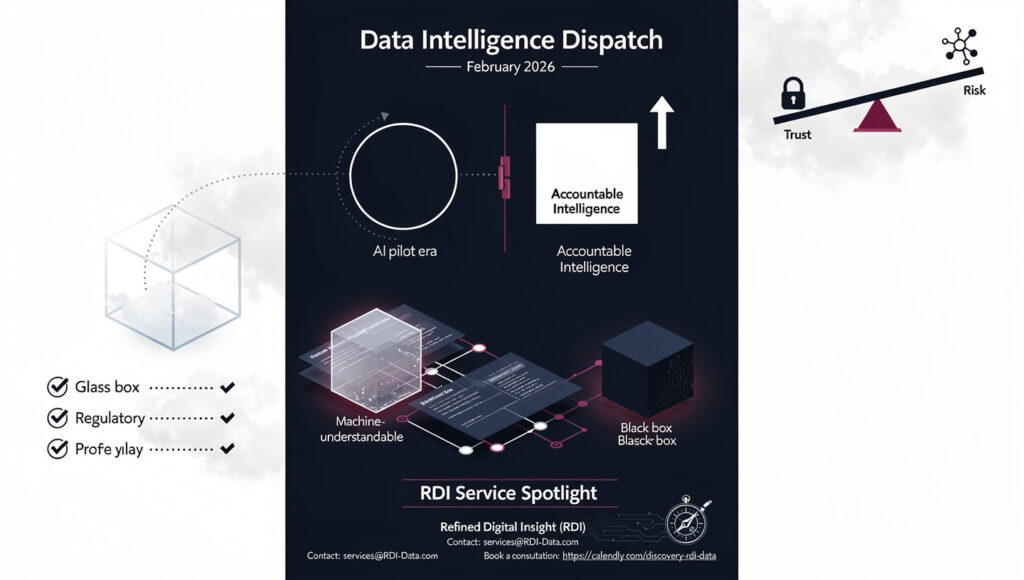
The intelligence landscape of February 2026 has been defined by a decisive pivot: the end of the "AI Pilot" era and the rise of Accountable Intelligence. As enterprises grapple with the Trust Paradox, the focus has shifted from merely storing data to creating Active Data Intelligence—systems that are human-verifiable and machine-understandable. A landmark development this month is the integration of Alteryx One and Collibra Data Lineage, which transforms lineage from a passive back-office safeguard into a frontline control for AI analytics. This "glass box" approach allows leaders to prove regulatory adherence and move beyond the "black box" complexity of agentic systems. In high-stakes sectors like finance, leaders are prioritizing AI observability and data literacy to bridge the skills gap, recognizing that an AI decision is only as valuable as the automated lineage that explains it.
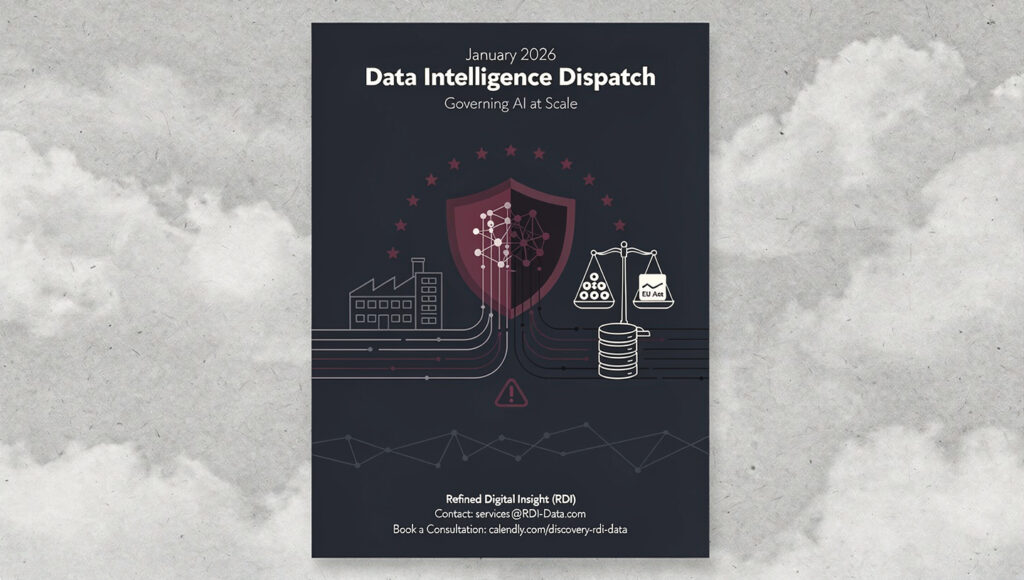
The January 2026 Data Intelligence Dispatch highlights the industry’s shift from experimental AI to the operational reality of governing autonomous systems at scale. The newsletter centers on the "Trust Paradox," where the demand for Agentic AI is outstripping organizational data readiness and AI literacy, making Unified Governance—as validated by Collibra’s leadership in the Gartner Magic Quadrant—the essential bridge for success. Key themes include the transition of data from passive storage into Active Organizational Memory, the rise of Decision Intelligence to orchestrate business outcomes, and the critical role of automated, column-level lineage in meeting the first major enforcement cycles of global regulations like the EU AI Act. Ultimately, the edition underscores that 2026 value is driven by packaging data into governed products and implementing AI observability to ensure that automated decisions remain accurate, unbiased, and transparent.